As an Amazon Associate, we earn from qualifying purchases. Some links on this site are affiliate links at no extra cost to you. Our recommendations are based on thorough research and editorial judgment.


How To Use Scanner Reliability Certification Testing?

To use scanner reliability certification testing, we first confirm compliance with industry standards like ISO 17025:2017. Then, we schedule tests, utilizing both automated and manual protocols. After developing clear test objectives, we assess accuracy and performance in real-world scenarios. This process helps us identify potential failures, reducing downtime and maintenance costs. With these practices, we can trust our scanners are reliable. If you’re curious about the detailed steps involved, we’ve got more insights to share!
Key Takeaways
- Evaluate scanner eligibility by reviewing program guides that confirm compliance with certification criteria before scheduling tests.
- Utilize both automated and manual testing protocols to create comprehensive and valid test cases for accurate assessment.
- Analyze outcomes against established metrics to determine compliance with industry standards and identify areas for improvement.
- Incorporate realistic scenarios in tests to ensure assessments accurately reflect practical competencies required for scanner use.
- Conduct routine quality assurance checks to maintain the integrity of certification processes and track performance trends over time.
Understanding Scanner Reliability Certification Testing
You may be interested



When we explore scanner reliability certification testing, it’s essential to understand what this process entails. This testing evaluates scanner accuracy and consistency in various testing environments, ensuring they operate reliably over time. By adhering to industry standards, we can rest assured that these scanners meet necessary guidelines. The testing methods include stress testing, performance evaluations, and environmental tests, which assess durability under extreme conditions. These rigorous assessments identify potential failures, causing us to reduce downtime and maintenance costs. Ultimately, certification not only enhances user trust but also provides a competitive edge in the market. By understanding reliability certification, we’re better equipped to make informed decisions on scanner performance and longevity, benefitting our overall operations considerably. Additionally, reliability certification ensures that the scanners maintain optical resolution standards, which is crucial for achieving accurate text recognition.
Recommended Products

FAST DOCUMENT SCANNING — Document scanner with feeder allows you to speed through stacks with a 50-sheet Auto Document Feeder (ADF); Efficient office scanner to help you scan more productively

FAST SPEEDS - Scans color and black and white documents a blazing speed up to 16ppm (1). Color scanning won’t slow you down as the color scan speed is the same as the black and white scan speed.

PORTABLE SCANNER FOR USE ON-THE-GO — The fastest and lightest mobile single-sheet-fed compact document scanner in its class¹
The Certification Testing Process
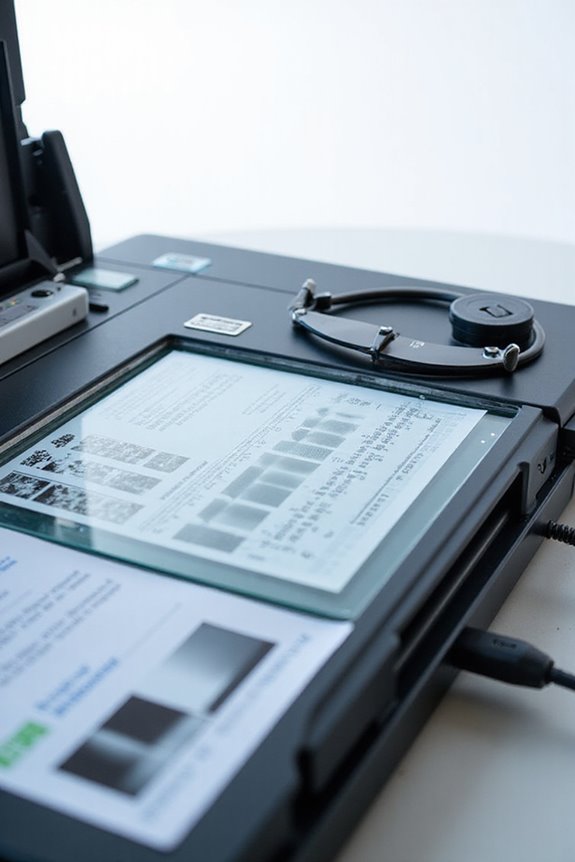
As we plunge into the certification testing process, it’s vital to recognize the structured approach that guarantees a scanner meets industry standards. First, we review program guides and provide technical details about our scanner to confirm compliance with certification criteria. After evaluating eligibility, we’ll schedule the test date, having completed prior steps. Next, submitting an attestation of compliance and required administrative information is essential for registration. Once registered, we gain access to training materials and finalize our test agreement. Using both automated and manual testing protocols, we create and validate test cases. Finally, we analyze outcomes to determine if our scanner meets the necessary standards, paving the way for certification issuance and ongoing compliance. Additionally, understanding scanner technology trends can inform improvements in the testing process.
Recommended Products

Flatbed scanners simply cannot compete with your smartphone and a Scanner Bin. Improved resolution and color rendering compared to popular flatbed scanners. Compare to 1200 DPI. Takes a fraction of the time to scan at a fraction of the cost. Not to mention that flatbed scanners end up adding a lot of hazardous e-waste to your local landfill.

Strong Decoding Capability: Up to 200 scans/sec Because of ARM-32bit Cortex High Speed Class-leading Processor. Decoding capabilities: Code39, Code93, Code32, Code128, UPC-A, UPC-E, EAN-8 , EAN-13, JAN.EAN/UPC GS1 2-digit add-on, GS1 5-digit add-on, MSI/Plessey, Telepen and Post Code, Interleaved 2 of 5, Industrial 2 of 5, Matrix 2 of 5

REVOLUTIONARY 4-KEY INSTANT SWITCHING Forget scanning complex manual setting codes. This Eyoyo USB desktop barcode scanner features 4 physical buttons that allow you to instantly switch between 1D/2D modes and paper/screen scanning settings. The intuitive design reduces setup frustration, helps minimize checkout errors, and allows staff to adjust scanning modes in seconds—ideal for fast-paced retail counters, libraries, pharmacies, and business checkout environments.
Developing Effective Certification Tests
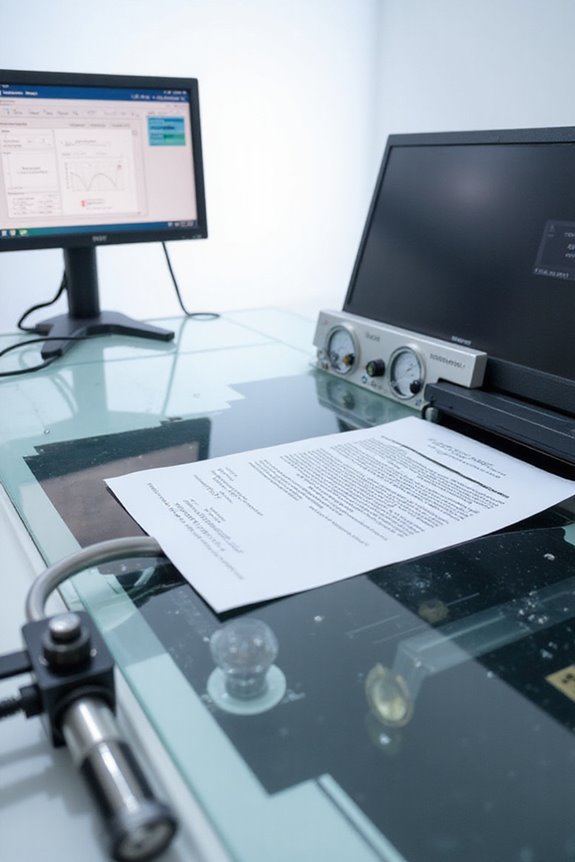
Developing effective certification tests is essential to confirm that scanners not only meet industry standards but also provide reliable performance in real-world applications. First, we need to establish clear test objectives that define the skills and knowledge essential for users. These objectives should align with job requirements, prioritizing those affecting scanner reliability and user safety. Next, we can focus on item development, creating a blueprint that maps diverse question formats to these objectives. Incorporating realistic scenarios helps to assess competencies accurately. By conducting iterative reviews with experts, we can refine test items for clarity and relevance. Ultimately, our goal is a balanced test that verifies candidates are well-prepared for practical uses of their scanner technology. Additionally, understanding advanced diagnostic capabilities can significantly enhance the relevance of the certification tests.
Recommended Products

Your Car's Personal Doctor: Say Goodbye to Check Engine Light Troubles! The YM319 OBD2 scanner swiftly reads and clears engine fault codes, pinpointing the root cause of issues. Monitor your engine's every "breath" like a pro—view freeze frame data, check I/M readiness status, run oxygen sensor tests, and more. With a built-in database of over 63,000 fault codes, it delivers precise and reliable diagnostics, making it your trusted partner for vehicle maintenance and repair.
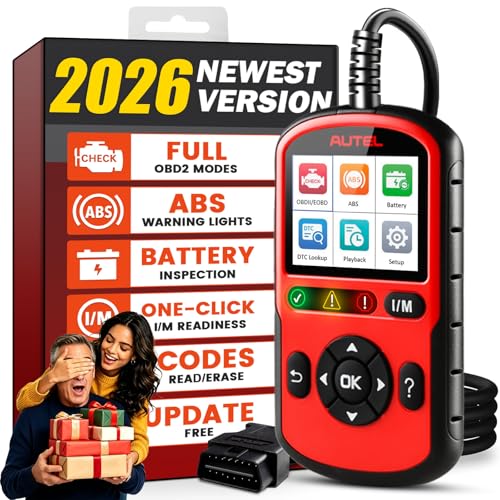
【Autel OBD2 Scanner Autolink AL549】Autel Autolink AL549 is a plug-and-play multifunctional OBD2 diagnostic tool that help you quickly identify your car problems by simply plugging into car DLC port. This new generation Autel car code reader can work on post 1996 vehicles to perform 3 major functions: Complete OBD2 Diagnostic function including all 10 modes OBDII test, One-click I/M Readiness check, read live data, turn off CEL(check engine light) or MIL and etc; universal car starting and charging system testing.

Industry Standards and Examples
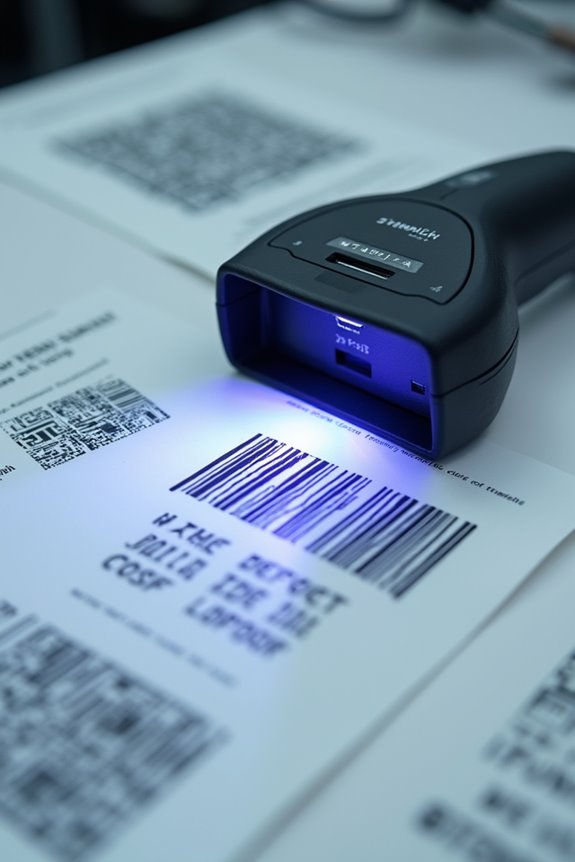
Understanding industry standards is essential for guaranteeing that scanner reliability certification testing meets the rigorous demands of users. By aligning with ISO 17025:2017, we guarantee that testing laboratories apply consistent quality management and technical competence. This standard mandates proficiency in personnel, methods, and traceability, which directly influences scanner performance. Additionally, we can refer to relevant hardware reliability tests, such as JESD22-B104C for mechanical shock testing and IEC 60068 standards for environmental tests. These testing methodologies help us establish benchmarks, allowing us to compare various scanners effectively. With standardized criteria, we lower ambiguity around pass/fail thresholds, resulting in trustworthy results that enhance end-user confidence and support consistent quality across the industry. Moreover, incorporating insights from the Fujitsu Fi-7160 Scanner can provide valuable context for evaluating scanner performance under such rigorous standards.
Best Practices for Reliable Certification
To guarantee scanner reliability certification testing is effective, we should prioritize best practices that lead to actionable outcomes. First, we’ll define clear objectives, including certification metrics like accuracy and error rates, to guide our testing phases. A structured multi-phase approach guarantees that lab testing identifies compatibility issues early, followed by user acceptance tests reflecting real operational conditions. Next, thorough test coverage with realistic document samples helps us meet reliability benchmarks by simulating diverse usage scenarios. Routine quality assurance checks and systematic documentation are essential for tracking trends and improving processes. By maintaining close control over test environments, we can refine scanner functionality continuously, guaranteeing that we consistently achieve our certification goals and meet customer expectations. Additionally, we should consider the scanning speed of different models, as it plays a crucial role in overall performance during testing.
The Role of Psychometrics and Accreditation
While best practices lay the groundwork for reliable certification, incorporating psychometrics and accreditation can greatly enhance the overall effectiveness of scanner reliability certification testing. Psychometric assessments provide valuable tools to objectively measure cognitive and personality traits, guaranteeing a thorough evaluation. With proper training in psychometrics, we can accurately interpret results, boosting the reliability of our tests. The accreditation importance cannot be overstated; it validates our competency in administering tests and assures stakeholders of our credibility. Accredited programs teach essential psychology principles and best practices, fostering ethical standards. By utilizing these measures, we can maintain high standards and guarantee consistent certification metrics, leading to trusted results that organizations can rely on for decision-making. Furthermore, ensuring compliance with HIPAA regulations is critical in protecting sensitive information, reinforcing the importance of reliable certification in medical settings.
Frequently Asked Questions
How Long Does the Certification Testing Process Typically Take?
Steering through the certification timeline feels like sailing across uncharted waters. Generally, we encounter a testing duration of several months, with waiting periods and preparation time, as we aim for successful completion together. Patience rewards us!
What Costs Are Associated With Scanner Certification?
When we consider scanner testing costs, we recognize that certification fee structures vary greatly. It’s essential to budget for preparation, audits, and ongoing security measures to guarantee compliance without facing unexpected financial burdens.
Can I Expedite the Certification Process?
We’ve seen manufacturers speed up certification by choosing authorized labs wisely. Utilizing expedited options and following certification tips, like preparing documentation ahead of time, can considerably cut the overall timeline for getting certified.
How Often Should Scanners Be Recertified?
We recommend recertifying scanners regularly, typically aligned with certification intervals of six months to two years. This approach not only optimizes scanner lifespan but also guarantees consistent accuracy and compliance with industry standards.
What Happens if a Scanner Fails Certification Testing?
When a scanner fails certification testing, we face failure consequences like reputation damage and regulatory action. We must take remediation steps, including thorough checks, compliance reviews, and training, to restore confidence and guarantee operational efficiency.