As an Amazon Associate, we earn from qualifying purchases. Some links on this site are affiliate links at no extra cost to you. Our recommendations are based on thorough research and editorial judgment.

How To Use Continuous Scanning Mode: 2026 Optimization Guide

To use continuous scanning mode effectively in 2026, we optimize scanning trajectories for maximum data collection. We set variables like pulse width and average per ray to guarantee quality. Synchronizing hardware and software enhances timing accuracy, reducing missed data points. By automating scan cycles with counters and timers, we streamline the process, improving workflow. Monitoring system performance helps us maintain efficient resource allocation. Stick with us, and you’ll uncover more ways to elevate your scanning capabilities in 2026.
Key Takeaways
- Ensure hardware and software synchronization to prevent missed data points during continuous scanning in 2026.
- Select appropriate scan variables, such as maximum range and gate length, for optimal data collection.
- Utilize counter and timer configurations to automate and manage scan cycles effectively.
- Monitor system performance regularly to balance communication and processing time for improved efficiency.
- Adjust scan patterns and velocities to enhance intricate data collection while maintaining accuracy.
Defining Scanning Trajectories and Velocities
You may be interested



When we talk about defining scanning trajectories and velocities in 2026, it’s crucial to understand how they impact our data collection. By focusing on trajectory optimization, we can program our detectors to follow linear, circular, or even complex paths. This flexibility helps tailor scans to specific needs. Velocity profiling is equally important; motors can move at constant or variable speeds. When surveying, changes in velocity allow for more intricate data collection patterns, ensuring we gather accurate data points. Additionally, timing and spatial averaging come into play, maximizing measurement accuracy as the detector moves. By adjusting scan speeds and intervals, we enhance both performance and data quality, ultimately resulting in a more effective scanning experience. Furthermore, scanning speeds can reach up to 60 pages per minute in advanced document feeders, significantly improving overall productivity.
Recommended Products

Scanner type: Document

FAST SPEEDS - Scans color and black and white documents a blazing speed up to 16ppm (1). Color scanning won’t slow you down as the color scan speed is the same as the black and white scan speed.
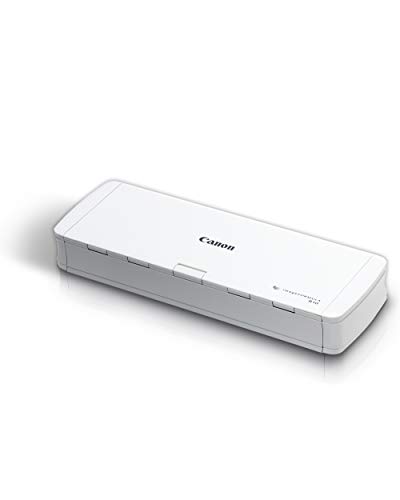
STAY ORGANIZED – Easily convert your paper documents into digital formats like searchable PDF files, JPEGs, and more.Power Consumption : 2.5W or less (Energy Saving Mode: 0.7W). Suggested Daily Volume : 500 scans..Does it contain liquid: no
Setting Up Scan Variables
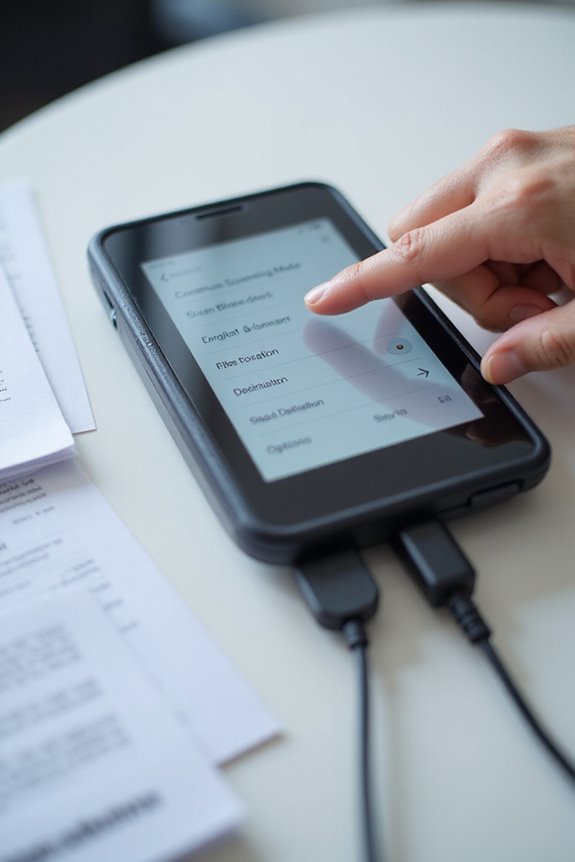
Setting up scan variables is a pivotal step in enhancing our continuous scanning operations in 2026. We begin by entering the maximum range before executing scans. Adjust the gate length value to control pulse width and resolution, ensuring the data meets our quality standards. Specifying the averages per ray allows us to balance speed and data quality effectively. Additionally, we need to configure FFT length to manage spectral resolution appropriately. If our system supports electronic focus, we can set it up for ideal signal clarity. With 255 pre-programmed scan patterns available, selecting the right one enhances our results. Once everything’s set, we confirm the pattern and press ‘Start now’ to initiate data acquisition while the scanner records its position. Understanding mobile device connectivity can further improve our scanning efficiency and flexibility.
Ensuring Hardware and Software Synchronization
To achieve ideal results in continuous scanning, it’s essential that we assure hardware and software synchronization operates seamlessly together. By utilizing hardware triggers, we can assure precise initiation of acquisition, minimizing the chance of missed points in 2026. On the other hand, software synchronization can introduce software latency, which can lead to variability in timing.
To maximize accuracy, we can configure a Measurement Group to harmonize both synchronization types effectively. This configuration helps us define which devices rely on hardware triggers and which depend on software timing. By combining these methods, we improve our acquisition precision while maintaining a smooth operational flow. In doing so, our scans become more reliable and accurate, bolstering the overall quality of our data collection efforts. Moreover, selecting scanners with batch scanning capabilities can significantly enhance the efficiency of continuous scanning processes.
Utilizing Counter and Timer Mechanisms
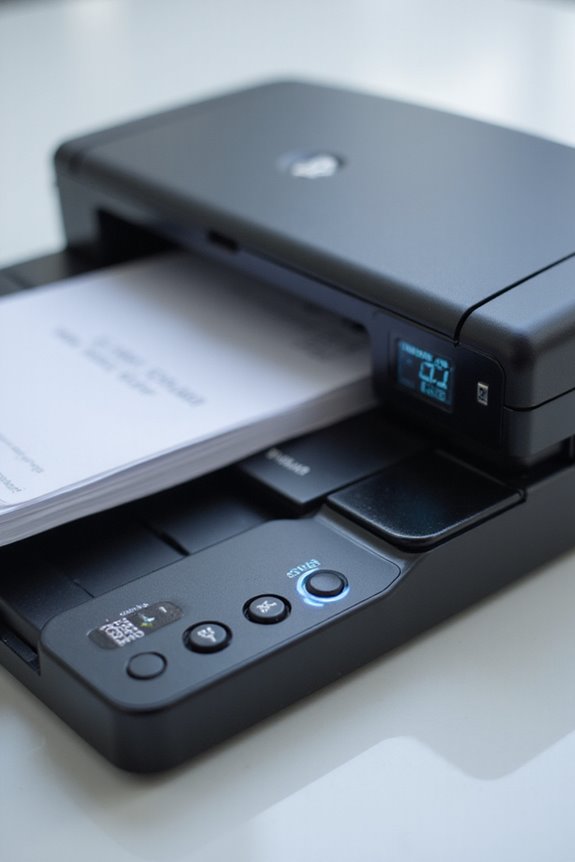
Incorporating counter and timer mechanisms into continuous scanning can greatly streamline our processes and enhance our efficiency in 2026. With precise counter configurations, we can control the number of scan cycles, stopping automatically after our set target. This feature is especially useful for batch scanning, allowing us to scan multiple documents without any manual input. Timer settings also play an essential role by scheduling scans, automating the process with fixed intervals. For instance, we can choose a 5-second delay between scans. Together, these mechanisms improve workflow and reduce CPU load, efficiently managing scan operations. Ultimately, utilizing counters and timers not only boosts productivity but guarantees dependable data handling, making our continuous scanning tasks more effective. Additionally, many modern scanners offer high optical resolutions that enhance the quality of scanned documents, ensuring clearer text extraction.
Monitoring and Adjusting System Performance
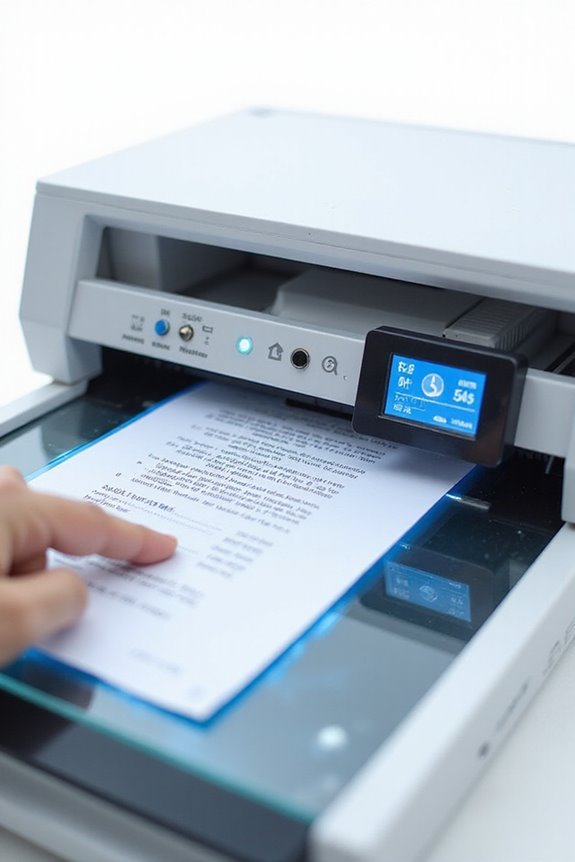
After we’ve set up counter and timer mechanisms, it’s time to focus on monitoring and adjusting system performance in 2026. We’ll need to make smart decisions regarding resource allocation to guarantee effective performance optimization. Continuous scanning dedicates a portion of the scan cycle—typically between 20% and 50%—to communications, which keeps our systems responsive. We’ve got to fine-tune the balance between communication and processing time, as excessive processing can block vital updates. Adjusting scan cycle timings allows us to customize performance, using mixed scanning modes for specific needs. Frequent monitoring enables immediate identification of vulnerabilities, making our environment safer. By refining these parameters, we support ongoing defense without sacrificing user experience. Additionally, ensuring advanced software features can greatly enhance scanning efficiency. Let’s stay vigilant to maximize efficiency and security.
Recommended Products

● Intuitive Button-Free Operation. Automatic RFID sensing technology allows checkpoint scanning without pressing buttons. Buzzer tones and LED indicators provide instant audio and visual confirmation of patrol status.

Frequently Asked Questions
What Are the Main Advantages of Continuous Scanning Mode?
We find continuous scanning mode offers significant advantages, like real-time monitoring and efficiency improvements. It enhances data quality, reduces scan times, and optimizes resource use, ultimately boosting productivity across various applications and settings in 2026.
In Which Industries Is Continuous Scanning Mode Commonly Used?
While industries like healthcare applications thrive on accuracy, manufacturing efficiency demands speed. We find continuous scanning mode elevating both sectors, ensuring seamless inventory management in pharmacies and rapid product tracking on assembly lines for enhanced operational performance.
How Does Continuous Scanning Impact Data Accuracy?
Continuous scanning impacts data accuracy through enhanced data validation and optimized scan frequency. While it introduces some noise, careful calibration and adjustments help maintain precision and reliability, ensuring our results align closely with established standards in 2026.
What Limitations Should I Be Aware of With Continuous Scanning?
Imagine traversing a maze; we hit walls when unaware of continuous scanning’s limitations. The constraints can lead to false positives and data overload, making it essential to understand this limitations overview for better management and efficiency.
Can Continuous Scanning Be Integrated With Existing Systems?
Yes, we can integrate continuous scanning with our existing systems. By focusing on system integration, we enhance operational efficiency, ensuring our workflows remain streamlined and effective while adapting to new scanning technologies in 2026.