As an Amazon Associate, we earn from qualifying purchases. Some links on this site are affiliate links at no extra cost to you. Our recommendations are based on thorough research and editorial judgment.

How To Use HIPAA Compliant Scanner Solutions?

To effectively use HIPAA compliant scanner solutions, we must first choose devices designed with strong encryption and auditing features. Next, we set up our scanning process in secure environments, ensuring only authorized personnel handle sensitive documents. Regular quality checks maintain data integrity, while robust access controls protect ePHI. By implementing secure data transfer methods, we minimize risks. If we stay proactive about training and audits, we can enhance our compliance further. There’s more to explore on this topic!
Key Takeaways
- Ensure the scanner features robust encryption and access controls to protect ePHI during scanning.
- Conduct regular training for staff on compliance standards related to using the scanner.
- Establish secure document handling protocols to maintain accountability and minimize risks.
- Use auditing functionality to track document access and maintain audit trails for security.
- Regularly assess and update user access levels to ensure only authorized personnel can view PHI.
Understanding HIPAA Compliance Requirements for Scanners
You may be interested



When it comes to understanding HIPAA compliance requirements for scanners, we must recognize the importance of safeguarding electronic health information (ePHI). One of the primary compliance challenges relates to the Security Rule, which mandates the protection of ePHI from unauthorized access. To address this, we need scanners equipped with features like strong encryption and robust access controls.
Implementing these features guarantees that sensitive data remains secure during scanning and storage. Regular risk assessments are vital; they help us identify potential vulnerabilities that could jeopardize compliance. Additionally, staff training plays a significant role in maintaining awareness of compliance standards. By focusing on these scanner features, we can enhance our workflows while effectively protecting ePHI and adhering to HIPAA requirements. Furthermore, using scanners with robust encryption features strengthens data security and compliance with HIPAA regulations.
Recommended Products

FAST SPEEDS - Scans color and black and white documents a blazing speed up to 16ppm (1). Color scanning won’t slow you down as the color scan speed is the same as the black and white scan speed.

PORTABLE SCANNER FOR USE ON-THE-GO — The fastest and lightest mobile single-sheet-fed compact document scanner in its class¹

Scanner type: Document
Choosing the Right HIPAA Compliant Scanner
Choosing the right HIPAA compliant scanner is essential for safeguarding electronic health information while guaranteeing efficient workflows. We need to carefully evaluate scanner features that assure data security, like robust encryption and strict authorization controls. It’s beneficial to look for devices with auditing functionality, providing detailed logs to track document access and modifications. High accuracy OCR and batch scanning capabilities are standout features that enhance productivity, especially in high-volume environments. During vendor evaluation, consider integration capabilities with existing content management systems, which streamline document management. Ultimately, selecting a scanner that aligns with HIPAA compliance not only protects sensitive information but also greatly improves our operational efficiency. Balancing these features guarantees we meet regulatory requirements while enhancing workflow effectiveness. Additionally, consider the scanning speed of the device, as it plays a crucial role in maintaining productivity levels in busy settings.
Recommended Products

Digitize on the Go - Connect to your computer via BUS powered, eliminating the need for batteries or external power sources
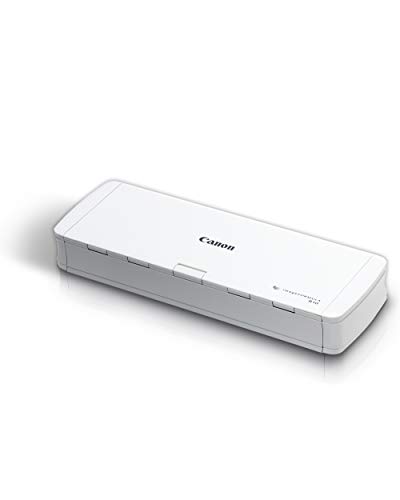
STAY ORGANIZED – Easily convert your paper documents into digital formats like searchable PDF files, JPEGs, and more.Power Consumption : 2.5W or less (Energy Saving Mode: 0.7W). Suggested Daily Volume : 500 scans..Does it contain liquid: no
Implementing a Secure Document Scanning Process
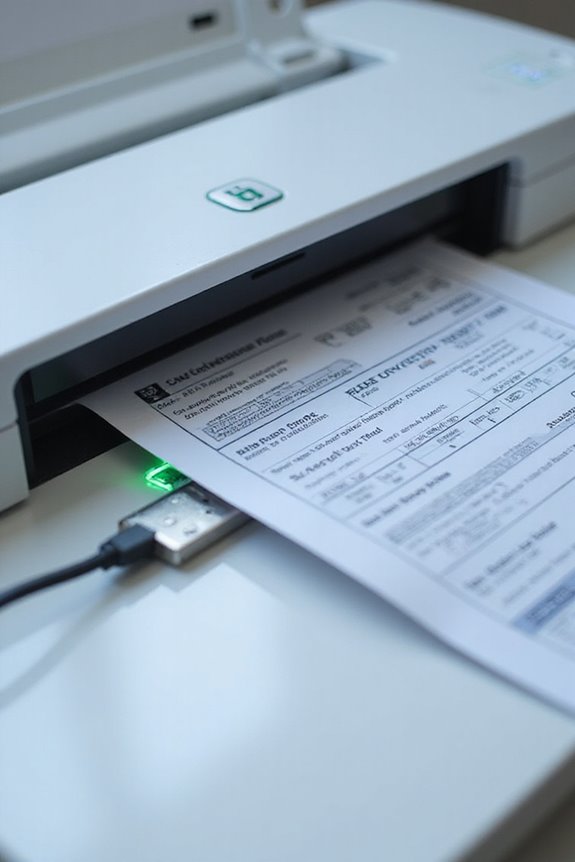
Implementing a secure document scanning process is crucial for protecting patient health information (PHI) and ensuring compliance with HIPAA regulations. First, we should conduct a thorough document inventory to identify and categorize all records before scanning. This allows us to prioritize documents and streamline our scanning workflow effectively. Clear document handling protocols are essential; every individual who accesses, modifies, or views PHI must be logged, ensuring accountability throughout the process. Additionally, documents must be scanned in secured environments using authorized personnel only. Regular quality checks during scanning enhance data integrity, while secure physical storage minimizes risks. By focusing on these key areas, we build a robust foundation for a compliant and efficient document scanning environment, safeguarding PHI throughout. Moreover, utilizing scanners with strong security features can further enhance the protection of sensitive information during the scanning process.
Recommended Products

FAST SPEED AND DUPLEX SCANNING – Scan single and double-sided documents in a single pass at up to 16 ppm(1). Color scanning doesn’t slow you down at all as it has the same scan speed as black and white document scanning.

FITS SMALL SPACES AND STAYS OUT OF THE WAY. Innovative space-saving design to free up desk space, even when it's being used
Ensuring Secure Data Transfer and Storage
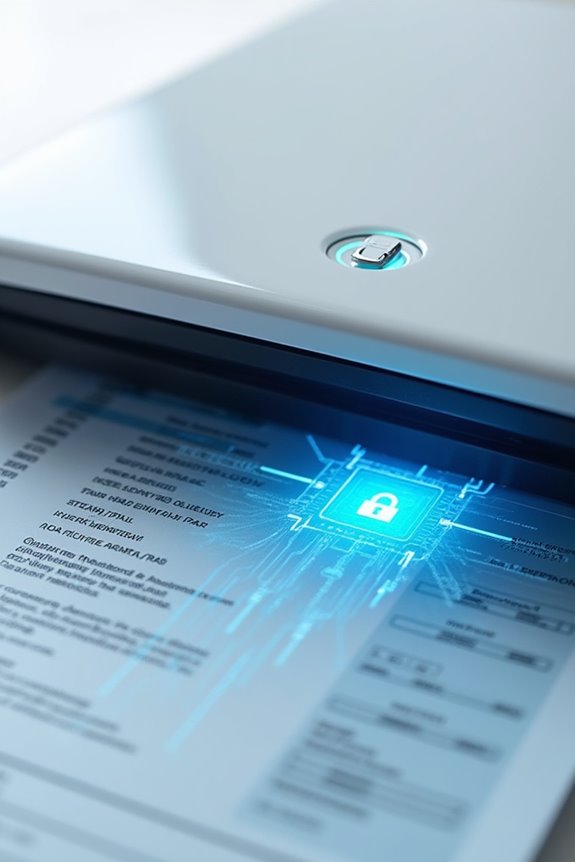
Guaranteeing secure data transfer and storage is essential for protecting sensitive patient information from unauthorized access. We should implement robust data encryption methods, like AES, to secure our data both in transit and at rest. Using secure protocols like SSL/TLS helps to protect data during transmission, guaranteeing it remains confidential. Additionally, we need strict access controls to limit who can view protected health information (PHI) during transfers, complemented by detailed audit trails to monitor all file activity. Regular compliance monitoring keeps our protocols up to date, reducing risks. Finally, utilizing state-of-the-art encryption for stored records guarantees protection against breaches, maintaining the integrity and confidentiality of patient information throughout the entire process. Moreover, selecting an OCR scanner with high optical resolutions ensures accurate text recognition, further safeguarding sensitive data.
Recommended Products

FAST DOCUMENT SCANNING — Document scanner with feeder allows you to speed through stacks with a 50-sheet Auto Document Feeder (ADF); Efficient office scanner to help you...
Establishing Access Control and Authorization Protocols
Establishing access control and authorization protocols is vital in safeguarding sensitive patient data. We must implement user authentication by guaranteeing each user has a unique account with strong, unique passwords and possibly multi-factor authentication. This approach helps us track access to protected health information (PHI) effectively. Role management is also essential; we should regularly review and update user roles to maintain appropriate access levels. It’s important to design emergency access procedures, allowing designated roles to access PHI during urgent situations while still protecting data integrity. Finally, automatic logout features can enhance security by disconnecting inactive users, minimizing risk. Together, these protocols not only guarantee compliance but also fortify our overall data protection strategy.
Recommended Products

A HIPAA compliance solution for healthcare providers like medical offices, dental offices and more

Control 4 doors, Get in door by swiping card, get out door by Exit button,Can Store/download/check Entry Detail records.

Control 4 doors, get in door by swiping card, get out door by exit button or by swiping card,support 4 readers.Can Store/download/check Entry Detail records.
Maintaining Compliance Through Regular Audits and Training
While maneuvering through the complexities of HIPAA compliance, it’s crucial that we prioritize regular audits and training to guarantee our organization consistently meets stringent standards. Regular audits enhance our audit effectiveness, allowing us to track who accesses Protected Health Information (PHI). Keeping our audit trails integrated into storage systems ensures transparency. Additionally, increasing training frequency helps us stay informed on HIPAA requirements and secure document handling. Updating policies and training materials aids in avoiding compliance failures. By fostering a culture of accountability, we minimize human error and enhance security awareness among staff. Documenting training completions and audit findings ensures we remain prepared for any compliance checks. Let’s embrace these practices for a secure and compliant environment. Furthermore, utilizing HIPAA compliant scanner solutions is essential for securely digitizing sensitive documents and maintaining compliance standards.
Frequently Asked Questions
What Features Should I Look for in a HIPAA Compliant Scanner?
When selecting a HIPAA compliant scanner, we should prioritize security features like document encryption, user authentication, and audit trails. These elements guarantee our ePHI remains protected and meets compliance standards effectively.
How Often Should I Conduct Vulnerability Scans for Compliance?
Like tending a garden, we should regularly assess our vulnerability scan frequency. A solid compliance scan schedule could start with quarterly scans, evolving to monthly as we strengthen our defenses against ever-present digital threats.
Can Small Practices Afford HIPAA Compliant Scanner Solutions?
Absolutely, small practices can afford HIPAA compliant scanner solutions by exploring cost-effective options tailored to their needs. We can leverage packages with essential features, ensuring compliance without breaking the bank while safeguarding patient data effectively.
What Are Common Mistakes in HIPAA Compliance for Scanning?
When it comes to scanning errors, we often overlook compliance pitfalls like inadequate encryption and improper disposal. Together, let’s focus on training and policies to avoid these common mistakes and protect patient information effectively.
Is Cloud Storage Sufficient for HIPAA Compliance With Scanned Documents?
Cloud storage can be sufficient for HIPAA compliance if it includes cloud encryption and proper data access controls. We must guarantee that all measures, like access logs and encryption, are robust to protect sensitive information.