As an Amazon Associate, we earn from qualifying purchases. Some links on this site are affiliate links at no extra cost to you. Our recommendations are based on thorough research and editorial judgment.


Scanning Government Documents: 2026 Security & Compliance Guide

To us, using a scanner for government documents starts with selecting the right model. We want something efficient, like the Epson WorkForce DS-70000, which scans up to 70 pages per minute. Security matters too, so look for scanners with encryption and multi-factor authentication. We also need to follow compliance standards, maintaining a minimum optical resolution of 300 dpi for accuracy. With these features, we’ll guarantee our documents are safely archived and managed. There’s more to explore on optimizing our scanning process.
Key Takeaways
- Select a scanner with high speed and optical resolution, like 300 DPI, to ensure clear and compliant document imaging.
- Regularly audit scanning processes and maintain clear policies for scanning, indexing, and storage of government documents.
- Utilize Optical Character Recognition (OCR) technology to convert scanned documents into editable formats for easier access and management.
- Implement strict access controls and user authentication to protect sensitive information, ensuring compliance with security regulations.
- Follow federal guidelines for document retention and categorization to ensure proper archival and retrieval of scanned records.
Selecting the Right Scanner for Government Documents
You may be interested

When selecting the right scanner for government documents, we need to evaluate several key factors that meet our specific needs. First, consider essential scanner features like speed and efficiency. For example, the Epson WorkForce DS-70000 scans up to 70 pages per minute, enhancing productivity for bulk scanning. We also need to think about our scanner budget; affordable options like the Brother DS-640 provide basic capabilities without breaking the bank. Don’t overlook security features, such as encryption, to protect sensitive information. Additionally, Automatic Document Feeders can manage large stacks of documents, saving us time. Finally, invest in scanners with Optical Character Recognition technology to convert images into editable formats, improving data accessibility for our tasks. Investing in a speedy scanner with scanning speeds can significantly enhance overall productivity, making document management more efficient.
Recommended Products

FAST SPEEDS - Scans color and black and white documents a blazing speed up to 16ppm (1). Color scanning won’t slow you down as the color scan speed is the same as the black and white scan speed.

PORTABLE SCANNER FOR USE ON-THE-GO — The fastest and lightest mobile single-sheet-fed compact document scanner in its class¹

FAST SPEED AND DUPLEX SCANNING – Scan single and double-sided documents in a single pass at up to 16 ppm(1). Color scanning doesn’t slow you down at all as it has the same scan speed as black and white document scanning.
Ensuring Compliance With Scanning Standards
Guaranteeing compliance with scanning standards is essential for government agencies as they navigate various regulations and guidelines. We must identify relevant federal, state, and local regulations, like NARA and FOIA, to guarantee we adhere. Regular compliance audits of our scanning processes help us maintain accountability and meet these standards.
Developing clear policies that document scanning, indexing, and storage procedures is imperative. Additionally, ongoing staff training is critical, guaranteeing everyone understands compliance protocols. Monitoring practices will enhance our adherence to standards, helping us avoid costly penalties. By implementing retention schedules aligned with legal requirements, we streamline record management, facilitating efficient access and safeguarding sensitive information. Furthermore, utilizing high optical resolutions (300+ DPI) ensures better accuracy in scanned documents, which is crucial for compliance. Together, we’ll create a compliant scanning environment, ultimately benefiting our agency and the public.
Recommended Products

Scanner type: Document

FAST DOCUMENT SCANNING — Document scanner with feeder allows you to speed through stacks with a 50-sheet Auto Document Feeder (ADF); Efficient office scanner to help you scan more productively

HIGH-SPEED PERSONAL PHOTO SCANNER¹ — Scan thousands of photos as quickly as 1 photo per second at 300 dpi ²; Further increasing your efficiency, this Epson picture scanner also allows you to batch-scan up to 36 photos at a time
Optimizing Scanning Resolution and Image Quality
After laying the groundwork for compliance with scanning standards, we can now focus on optimizing scanning resolution and image quality to guarantee the best results. For standard documents, let’s confirm a minimum effective optical resolution of 300 dpi. For oversized documents larger than 11”x17”, we should aim for at least 200 dpi. Adjusting resolution appropriately enhances image clarity, particularly for photos and graphics, which should be scanned at a higher resolution of 300-400 dpi. To avoid any loss of quality, we won’t use interpolation. By consistently monitoring our settings and performing quality checks on 20% of scans, we can maintain high standards, confirming all documents are legible and accurately reproduced to their original specifications. Additionally, evaluating scanner technology trends can help us stay updated on the latest advancements that may improve our scanning processes.
Recommended Products
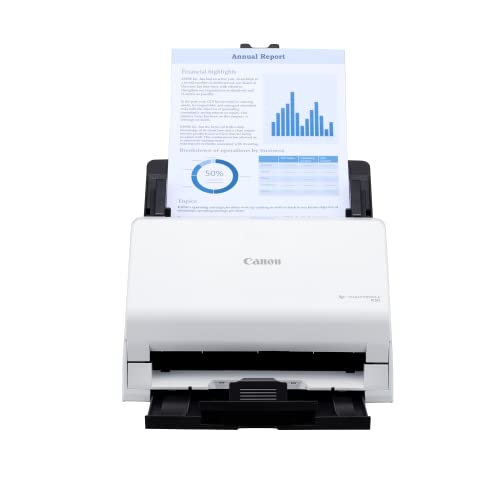
Stay organized: Easily convert your paper documents into searchable digital formats

Efficient Duplex Scanning: The HP PS150 Portable Document Scanner captures both sides of a page in one pass, processing up to 15 pages per minute. This duplex scanner is ideal for handling contracts, invoices, and reports

Native CamScanner Integration: The P1 Pro portable printer works seamlessly with the CamScanner app featuring 7 optimized filters for contracts, receipts, tax forms, handwritten notes, photos, and more. Each filter improves clarity and contrast so scanned files print sharp and easy to read. Set the quantity once and batch print multiple documents with a single tap - no repeated operations, no wasted time
Implementing Security and Access Controls
To effectively protect sensitive government documents, we must implement robust security and access controls that safeguard information throughout its lifecycle. By leveraging role hierarchy in our system, we can assign access rights strictly based on job functions, ensuring only authorized personnel can access sensitive data. Regularly reviewing roles allows us to adapt as personnel change or security needs evolve.
Additionally, we need strong user authentication measures, like multi-factor authentication, to prevent unauthorized access. This includes employing password policies that enforce complexity and expiration. Integrating centralized authentication services helps streamline credential management, ensuring that only verified users can retrieve scanned documents. Together, these strategies not only enhance our security posture but also support compliance with regulations governing document management. Furthermore, utilizing HIPAA-compliant scanners ensures that scanned documents are handled securely and meet necessary legal requirements.
Recommended Products

Flatbed scanners simply cannot compete with your smartphone and a Scanner Bin. Improved resolution and color rendering compared to popular flatbed scanners. Compare to 1200 DPI. Takes a fraction of the time to scan at a fraction of the cost. Not to mention that flatbed scanners end up adding a lot of hazardous e-waste to your local landfill.
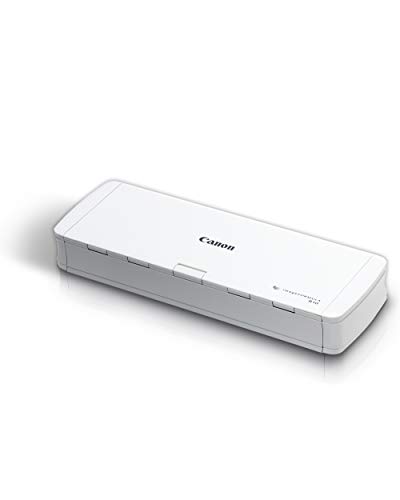
STAY ORGANIZED – Easily convert your paper documents into digital formats like searchable PDF files, JPEGs, and more.Power Consumption : 2.5W or less (Energy Saving Mode: 0.7W). Suggested Daily Volume : 500 scans..Does it contain liquid: no

FITS SMALL SPACES AND STAYS OUT OF THE WAY. Innovative space-saving design to free up desk space, even when it's being used
Managing Document Archival and Retention Handling
Managing document archival and retention handling isn’t just about keeping records; it’s about meeting legal obligations and ensuring access to essential information. We need to take into account record categorization as we develop our retention schedules. Following federal guidelines, like those from NARA, is vital to maintain compliance. Implementing effective digital storage solutions helps us safeguard records against disasters while providing easy access for audits. We should regularly inventory our records using standardized forms, ensuring our schedules are renewed every five years. This keeps us up to date and organized. Utilizing modern document management software can enhance efficiency, making it easier to locate critical documents when needed. By prioritizing these practices, we can streamline our archival processes and maintain accountability. Additionally, leveraging scanning technology can significantly improve the speed and accuracy of document management tasks.
Recommended Products


![Corel WordPerfect Office Home & Student 2021 | Office Suite of Word Processor, Spreadsheets & Presentation Software [PC Download]](https://m.media-amazon.com/images/I/41729cFmBVL._SL500_.jpg)
What’s Included: Digital delivery with instant access to WordPerfect; serial key available in your Software Library. For Windows PC only.
Frequently Asked Questions
What Types of Documents Require Special Scanning Attention?
When dealing with confidential materials, we must pay special attention to top secret documents, SAPs, and nuclear information. These require stringent protocols for archival preservation to guarantee their ongoing security and integrity.
How Do I Maintain My Scanner for Optimal Performance?
To guarantee our scanner’s success, let’s prioritize perfecting its performance with smart scanner cleaning and steadfast maintenance tips. Regularly maintaining our device enhances efficiency and longevity, keeping our scanning experience seamless and considerably stress-free.
Can I Use a Smartphone for Scanning Official Documents?
Sure, we can use smartphone apps for scanning official documents, but we should prioritize scanning quality. With the right app and good lighting, we can achieve clear, consistent results, ensuring our documents are well-preserved.
What Documents Should Be Prioritized for Scanning?
When we think about priority documents, we recognize the value of birth certificates, legal agreements, and financial records. By scanning these, we enhance accessibility, guarantee security, and streamline management—revealing numerous scanning benefits for our organization.
How Can I Ensure Backups of Scanned Documents?
To guarantee our scanned documents are backed up, we need reliable cloud storage solutions combined with solid document organization. Regular audits and automated processes will help maintain integrity and compliance, safeguarding our essential information.