As an Amazon Associate, we earn from qualifying purchases. Some links on this site are affiliate links at no extra cost to you. Our recommendations are based on thorough research and editorial judgment.


What is a High-Speed Scanner? 2026 Technology & Benefits

High-speed scanners are efficient devices that quickly convert large volumes of physical documents into digital format. Operating at speeds of 50 to over 100 pages per minute, they feature automatic document feeders that can handle 50 to 100 sheets at once, enhancing productivity. With optical resolutions ranging from 600 dpi to 1600 dpi, they guarantee clear image quality. These scanners streamline workflow, reduce costs, and enhance compliance, all while making document management easier. Let’s explore more about their innovations and benefits.
Key Takeaways
- High-speed scanners are devices that rapidly digitize large volumes of documents, typically exceeding speeds of 50 pages per minute.
- They feature automatic document feeders, allowing batch scanning of multiple sheets for efficient processing.
- These scanners utilize duplex technology for scanning both sides of pages simultaneously, enhancing speed and productivity.
- High-speed scanners are used in diverse sectors like healthcare and finance for efficiently managing and archiving documents.
- Their use leads to significant cost savings and improved workflow by reducing manual labor and enhancing document accuracy.
Definition of High-Speed Scanners

You may be interested



High-speed scanners are innovative devices that, while simplifying the digitization of large document volumes, greatly enhance our workflow efficiency. Designed to quickly process documents, these scanners convert physical papers into digital images at speeds often exceeding standard consumer models. They operate at impressive rates, usually measured in pages per minute (ppm), including duplex scanning for double-sided pages. Equipped with automatic document feeders, they allow for batch scanning, making them invaluable in high-demand settings like healthcare and finance. By facilitating rapid digital conversion, high-speed scanners not only save us time but also improve overall productivity. Their effectiveness in capturing large volumes of documents guarantees we can manage our data with high speed efficiency, driving our operations forward seamlessly. Additionally, high-speed scanners like the RICOH fi-8170 offer advanced paper feeding systems that enhance their performance in busy office environments.
Key Characteristics of High-Speed Scanners
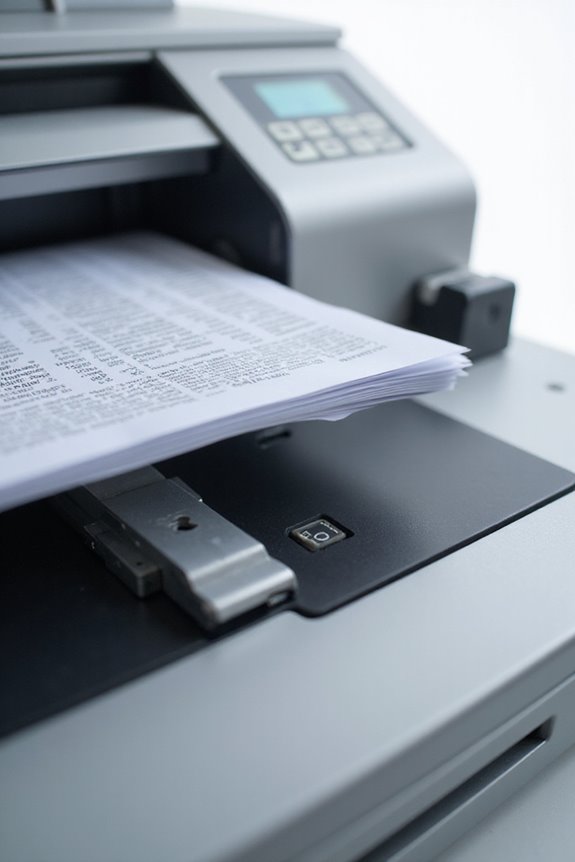
When considering the key characteristics of high-speed scanners, we find several features that greatly enhance our document processing capabilities. Most high-speed scanners operate at impressive speeds of 50 to over 100 pages per minute, ensuring quick handling of large batches. With optical resolutions ranging from 600 dpi to 1600 dpi, we can expect exceptional image clarity. The automatic document feeders streamline our workflow, enabling us to scan 50-100 sheets at once and often doubling efficiency with duplex scanning. Advanced image processing features like auto exposure and color detection further optimize results. Plus, we enjoy seamless integration with various software, ensuring that our scanning efficiency meets diverse document management needs. Overall, these characteristics make high-speed scanners invaluable for any busy environment. Additionally, many models come equipped with Advanced image processing capabilities that enhance scanning accuracy and quality.
Recommended Products

HIGH-SPEED PERSONAL PHOTO SCANNER¹ — Scan thousands of photos as quickly as 1 photo per second at 300 dpi ²; Further increasing your efficiency, this Epson picture scanner also allows you to batch-scan up to 36 photos at a time

FAST DOCUMENT SCANNING — Document scanner with feeder allows you to speed through stacks with a 50-sheet Auto Document Feeder (ADF); Efficient office scanner to help you scan more productively

FAST SPEEDS - Scans color and black and white documents a blazing speed up to 16ppm (1). Color scanning won’t slow you down as the color scan speed is the same as the black and white scan speed.
Technology Behind Scanning Speed

The technology behind scanning speed is a blend of precision engineering and advanced digital processes. High-speed scanners utilize various scanning mechanisms, like parallel beam and moving mirrors, to efficiently capture images. These components work together to optimize light direction and enhance image quality. By employing duplex technology, these scanners can scan both sides of a document simultaneously, effectively doubling output and reducing mechanical wear. This means less time wasted and improved workflow for businesses processing high volumes of double-sided documents. Enhanced document feeders further guarantee smooth, continuous scanning by accommodating different paper types. Together, these advancements markedly boost efficiency, allowing us to handle large batches without interruptions and maintaining high-quality results at impressive speeds. Many high-speed scanners also feature single-button operation, simplifying the scanning process and further enhancing productivity.
Factors Influencing Performance
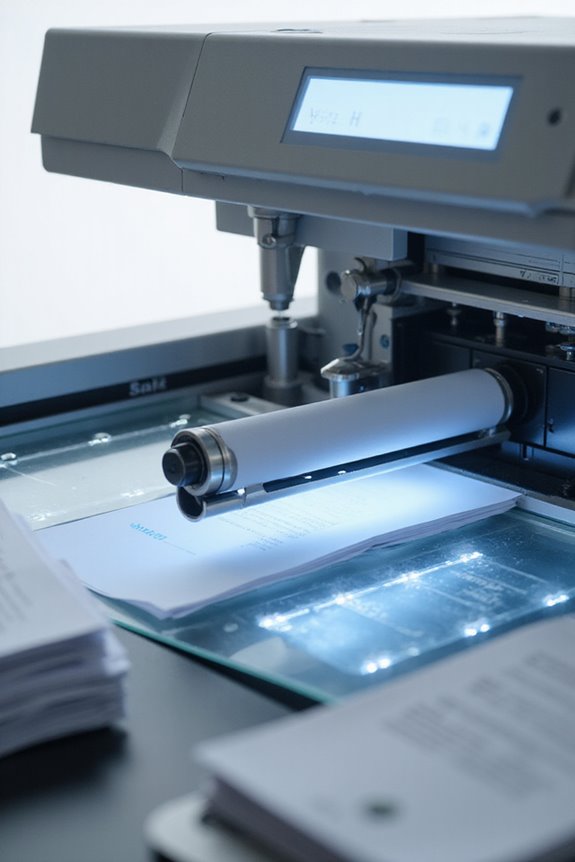
While many aspects contribute to the overall performance of a scanner, we can identify several key factors that play essential roles in enhancing efficiency and output. The hardware quality, including galvanometer mirrors and motors, directly affects scanning precision and speed. Efficient control software optimizes performance, compensating for mechanical issues and ensuring smooth operation. In addition, data transfer rates through modern connections minimize bottlenecks, speeding up processing. Mechanical stability, achieved through robust design and maintenance, reduces vibrations that could degrade image quality. Finally, environmental conditions, like dust or temperature fluctuations, can impact accuracy. By understanding these factors, we can make informed choices, leading to better performance optimization and ultimately superior scanning resolution and image quality. Additionally, scanning speed is a crucial aspect for high-demand environments, as it directly influences productivity and workflow efficiency.
Recommended Products

PORTABLE SCANNER FOR USE ON-THE-GO — The fastest and lightest mobile single-sheet-fed compact document scanner in its class¹

OUR MOST ADVANCED SCANSNAP. Large touchscreen, fast 45ppm double-sided scanning, 100-sheet document feeder, Wi-Fi and USB connectivity, automatic optimizations, and support for cloud services. Upgraded replacement for the discontinued iX1600
Applications in Various Environments

High-speed scanners have become essential tools for various industries, as they enhance efficiency and streamline operations across multiple environments. In healthcare digitization, they’re critical for quickly managing lengthy patient records, ensuring compliance while reducing clerical errors. Government archives benefit from speedy processing of historical documents and ballots, preserving important information for future access. Financial institutions rely on high-speed scanners to efficiently handle contracts and transaction records, maintaining accuracy even at high volumes. Furthermore, manufacturers leverage these devices for smooth inventory management and supply chain documentation. Ultimately, by transforming physical documents into digital formats, we save storage space and improve record-keeping across diverse sectors. The advantages of high-speed scanners truly make them invaluable in today’s fast-paced environments. Additionally, high-speed scanning technology, such as that found in the CZUR ET16 Plus, significantly boosts productivity by allowing libraries to digitize large volumes of materials quickly.
Recommended Products
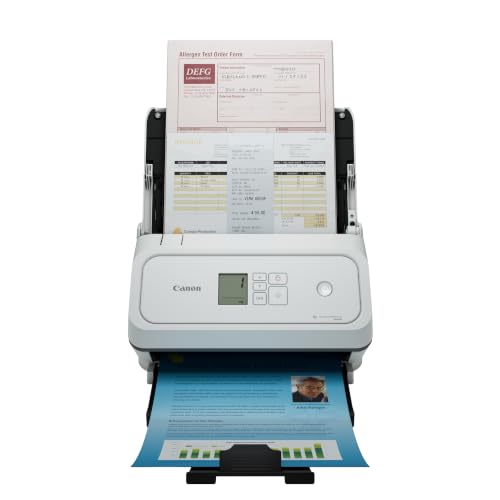
Fast and Efficient: Scans both sides of a document at the same time, in color, at up to 45 pages per minute, with a 60 sheet automatic feeder, and one touch operation. Innovative Feeding System.
Innovations and Performance Enhancements
As we explore innovations and performance enhancements in high-speed scanners, it’s clear that these advancements have substantially transformed the industry. AI integration optimizes workflows, streamlining processes like noise filtering and data error correction, which boosts accuracy and dramatically reduces processing times. Modern hardware innovations, such as wireless designs and multiple laser lines, greatly improve speed and measurement density. High-speed scanners achieve a volumetric accuracy of about 0.075 mm, while capturing millions of data points per second. These innovations enhance workflow automation and enable effective data visualization, making complex scanning projects more manageable. Overall, the blend of cutting-edge technology guarantees quicker project completion and higher-quality outputs, essential for industries demanding precision. Furthermore, the introduction of high-speed scanning capabilities allows businesses to handle larger volumes of documents efficiently, catering to the growing demand for productivity in various sectors.
Measurement and Specifications Standards
In considering measurement and specifications standards, it becomes clear that having precise metrics is vital for high-speed scanners. These devices typically feature measurement ranges tailored to specific applications, guaranteeing accuracy standards are upheld. For example, laser micrometers achieve linearity of ±1.0 µm and repeatability of ±0.1 µm. Optical resolution, guided by imaging standards, can reach 1600 x 3200 dpi, allowing for detailed captures. Scanning speed is often expressed in pages per minute, with some models hitting 130 ppm. Additionally, throughput specifications highlight the capacity to handle large sheets efficiently. Environmental and mechanical standards, alongside proper calibration procedures, are critical for consistent performance. Finally, compliance regulations confirm these devices operate safely, providing users with peace of mind overall.
Recommended Products

Scanner type: Document

Ultra compact space-saving design — saves 60% of desk space (1) in virtually any environment
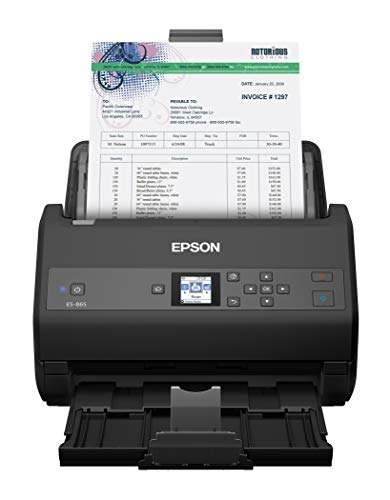
Lightning-fast color scans, from a leader in image capturing technology — up to 65 ppm/130 ipm (1); scan both sides in a single pass; peak daily duty cycle of up to 7, 000 sheets per day (3)
Impact on Business and Productivity
A considerable transformation occurs when businesses implement high-speed scanners. These devices greatly boost business efficiency by digitizing large batches of documents rapidly, cutting processing time dramatically. This acceleration frees up employee resources, allowing us to focus on strategic tasks, leading to notable productivity enhancement. High-speed scanners automate processes, which reduces manual errors and enhances workflow accuracy. They accommodate various document sizes, minimizing bottlenecks and ensuring uninterrupted operations. Additionally, organizations notice reduced payroll costs as the need for manual labor decreases. Investing in these scanners not only offsets initial expenses but leads to long-term savings in storage and retrieval costs. Ultimately, high-speed scanning streamlines our workflow, providing a competitive advantage in today’s fast-paced business environment.
Recommended Products

Portable Scanner with Automatic Document Feeder (ADF) / Manual Feed

EXCEPTIONAL SCANNER. PREMIUM PROTECTION. Includes a 4-year protection plan, ensuring peace of mind and uninterrupted productivity from day one.
Frequently Asked Questions
Can High-Speed Scanners Handle Various Paper Sizes and Types?
Yes, we’ve found that high-speed scanners excel in paper handling, offering impressive size versatility. They seamlessly accommodate various document types and sizes, enhancing our efficiency while managing mixed batches during scanning tasks.
How Do I Maintain a High-Speed Scanner for Optimal Performance?
To maintain peak performance, we should focus on regular scanner cleaning and software updates. By routinely cleaning components and ensuring our software is current, we enhance functionality and prolong the life of our high-speed scanner.
Are High-Speed Scanners Compatible With Cloud Storage Solutions?
When it comes to cloud integration, we’re all in the same boat! High-speed scanners do offer versatile storage options, making it easy for us to upload and access documents securely from anywhere, enhancing our productivity.
What Is the Average Lifespan of a High-Speed Scanner?
When we consider the average lifespan of high-speed scanners, we find that factors like usage hours and maintenance greatly influence scanner durability. Proper care can extend their life considerably, often beyond typical expectations.
Can High-Speed Scanners Scan Photos or Only Documents?
You might think high-speed scanners can magically transform photos like they do documents, but not quite! For photo scanning, they’re a bit clumsy compared to specialized devices. Stick to document scanning for speed and efficiency!