
To use a scanner with a FireWire IEEE connection, we first verify we have the right drivers installed, like TWAIN or ISIS, and check that our OS supports FireWire. Next, we securely connect the scanner to the FireWire port using the appropriate cable type. Power up the device with its AC adapter for peak performance, as scanners typically need around 32W. By following these steps, we can achieve effective scanning results. Let’s explore more details to enhance our setup.
Key Takeaways
- Verify that your operating system supports FireWire and install the necessary ISIS and TWAIN drivers for optimal performance.
- Connect the scanner to the computer’s FireWire port securely using the appropriate 6-pin or 9-pin cable.
- Ensure your PC has an OHCI compliant IEEE 1394 port; consider installing a PCIe card if needed.
- Use the provided AC adapter to ensure your scanner gets adequate power during operation.
- Organize and label cables to prevent tangling and facilitate easy identification during setup.
Installation Requirements for Scanner FireWire IEEE Connection

When setting up a FireWire connection for your scanner, it’s important to take into account several installation requirements to guarantee seamless operation. We need to verify driver compatibility by installing both ISIS and TWAIN drivers, which are vital for proper scanner detection and functionality. Our installation checklist should start with confirming that our operating system supports FireWire hardware, like Windows 98 SE or later versions. We should also check for available PCI or PCIe slots if FireWire ports aren’t built-in. Remember, custom drivers from the manufacturer may enhance performance, so it’s wise to download those if needed. Finally, make sure our system has the required updates to prevent any communication or performance issues during operation. Additionally, having a reliable OBD2 scanner can assist in diagnosing any potential issues that may arise during the setup process.
Physical Connection Setup and Cable Management
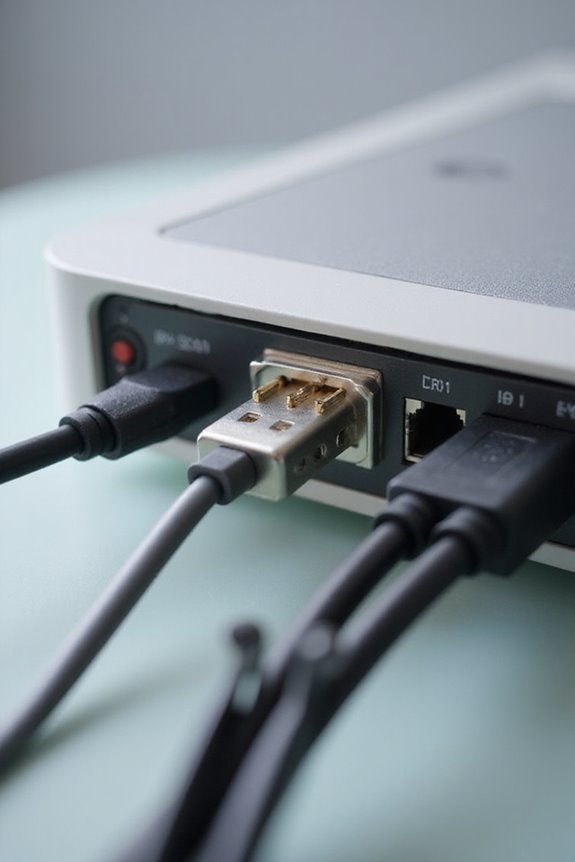
Setting up the physical connection for our FireWire scanner is essential to guarantee peak performance and reliability. We should start by selecting the right cable types: use a 6-pin or 9-pin cable based on our devices. Connect the scanner’s output port to the computer’s FireWire port, ensuring a solid fit to avoid bent pins. For daisy chaining, connect subsequent devices to the previous one’s secondary port. To keep things organized, we can use cable ties to bundle them neatly and avoid tangling. It’s also smart to label both ends of our cables for easy identification. Finally, let’s keep our FireWire cables away from power sources to minimize interference for peak data transfer. Additionally, ensuring your scanner has high-speed scanning efficiency will enhance your overall experience in managing documents effectively.
Hardware Compatibility and Interface Cards
To guarantee our FireWire scanner operates smoothly, we need to focus on hardware compatibility and the right interface cards. It’s vital to confirm our PC has an OHCI compliant IEEE 1394 port or card, especially since some cards might not work with newer systems. For those of us using older machines, SCSI boards are an alternative option. If our PC lacks a built-in FireWire port, we can choose from PCIe x1, x4, or mini PCIe cards for installation. FireWire to USB adapters also offer flexibility, but they can introduce hardware limitations we should be aware of. By evaluating our interface options and confirming compatibility, we’ll enhance our scanner’s performance and guarantee seamless connectivity. Additionally, ensuring our system is equipped with plug-and-play functionality can further streamline the setup process.
Operating System Support and Driver Installation
Ensuring our FireWire scanner runs smoothly across various operating systems requires a solid understanding of compatibility and driver installation. For Windows, we need to install TWAIN and ISIS drivers; they help our system recognize the scanner effectively. While Windows XP had issues at first, updates like Hotfix 885222 fixed performance problems. MacOS previously supported FireWire, but this support ended, limiting driver options. Linux provides robust support through libraw1394 and the JuJu driver, with community-driven driver updates available. However, we should remember that future support for FireWire in Linux is set to decline after 2029. Checking for the right driver updates based on our operating system is essential for ideal scanner performance and usage. Additionally, understanding OCR technology can enhance the overall efficiency of document handling and management.
Power Considerations and Device Behavior
While we might appreciate the convenience of FireWire connections, power considerations are essential for ensuring our scanner operates effectively. Using the provided AC adapter is vital for maximum power efficiency; most scanners require more than the standard FireWire ports can provide. Typically, these devices need around 32W during operation, with standby at 19W and sleep mode dropping to just 4W. Inadequate power can lead to inconsistent performance, such as dimming lights or stalled motors, negatively impacting device reliability. To optimize our scanner’s operation, we should always connect it to a reliable power source and monitor its modes. This practice minimizes energy use and enhances our scanning experience without compromising performance or usability. Additionally, considering the power source options available for scanners can help in selecting the right model that meets your needs.
Using the Scanner via FireWire in Software
Using a scanner via FireWire requires not just a physical connection, but also the right software setup. To guarantee proper scanner configuration, we need both TWAIN and ISIS drivers installed. TWAIN drivers facilitate basic functionality on Windows, while ISIS drivers offer advanced features within software like PaperFlow. After confirming that the FireWire adapter is functioning correctly, we should check for software integration by verifying compatibility with our operating system. It’s essential to keep our drivers updated to avoid detection issues. Additionally, using software that supports both TWAIN and ISIS can enhance our scanning process. Together, these steps guarantee that our scanner operates efficiently and allows us to maximize its potential. Moreover, ensuring scanner software compatibility is crucial for maintaining optimal performance and productivity.
Frequently Asked Questions
What Troubleshooting Steps Should I Take if the Scanner Isn’t Detected?
When we face scanner recognition issues, let’s first check the FireWire connection. We should verify cables are secure, test different ports, and confirm drivers are updated, troubleshooting each step for potential FireWire connection problems.
Can I Connect Multiple Scanners to One Firewire Port?
Yes, we can connect multiple scanners to one FireWire port using a FireWire hub setup. However, we might encounter scanner compatibility issues, as each device requires unique drivers and can affect overall performance.
Will Using a Longer Firewire Cable Affect Scan Quality?
Using a longer FireWire cable can affect scan quality if we compromise signal integrity. While length matters, maintaining proper shielding and using quality cables helps guarantee our scanning performance stays intact across greater distances.
Are Firewire Scanners Faster Than USB Scanners?
Oh, the eternal debate! While FireWire boasts advantages, we can’t ignore USB’s limitations. Speed differences are often negligible, so let’s not get too caught up in who’s faster—it’s more about what suits our needs!
How Can I Check if My Firewire Drivers Are up to Date?
To check if our FireWire drivers are up to date, we should verify driver installation in Device Manager, ensuring driver compatibility with our system. Regular updates from manufacturers can help maintain peak performance and functionality.